
Summary: The Descending Triangle Pattern is a bearish continuation chart pattern formed by a horizontal support and a descending trendline resistance. It forms when the price keeps hitting the same low but also makes lower highs. This means sellers are pushing the price down and indicates increasing selling pressure leads to breakdown below support. Traders use this pattern to identify bearish trends.
In this blog post, we’ll learn about the bullish Descending Triangle chart pattern, how to identify it, trading strategies, examples, and essential tips to consider while trading with it. So, let’s discuss…
What is the Descending Triangle Chart Pattern?
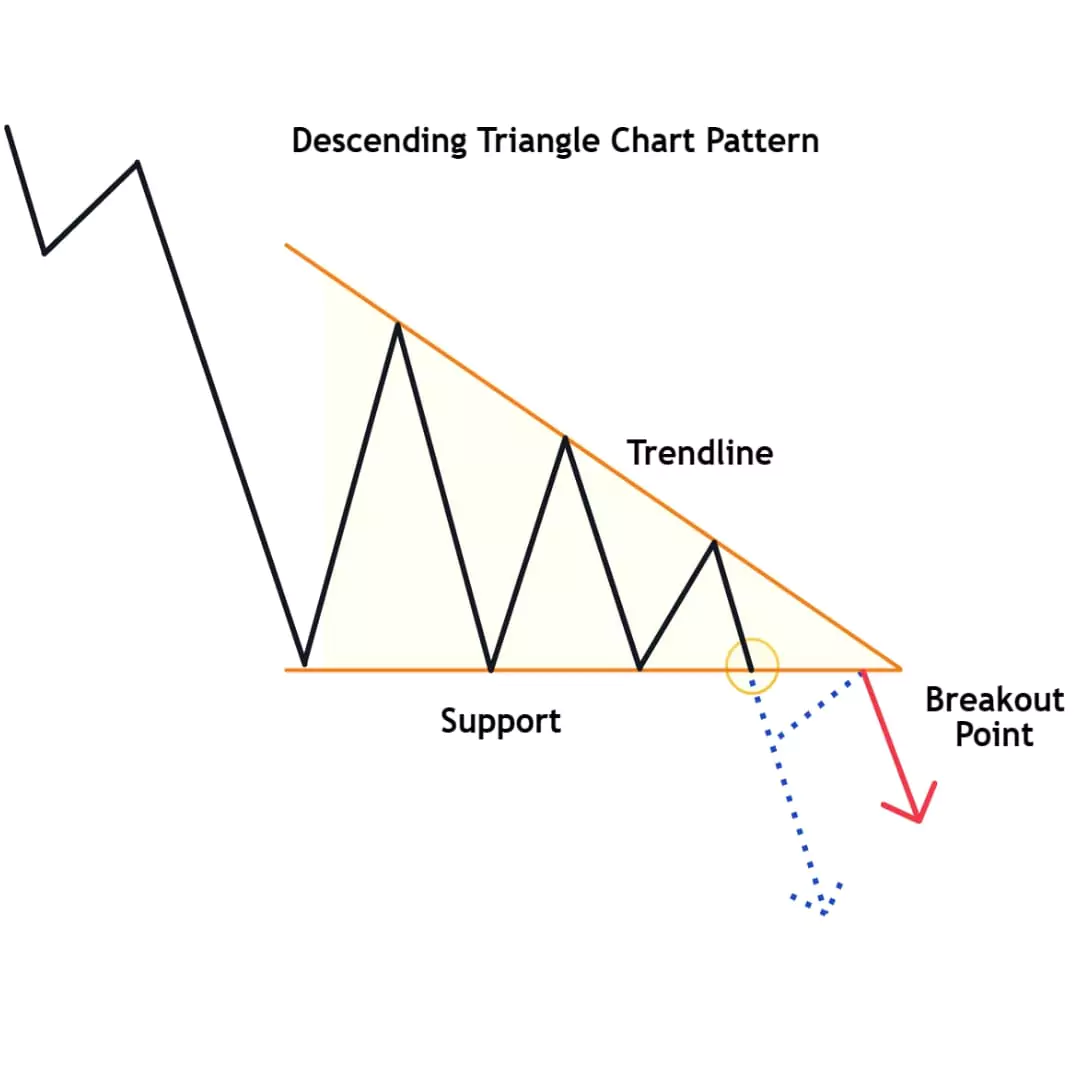
The Descending Triangle Pattern is a powerful Bearish chart pattern that forms during a downtrend and includes a great price action concept. It features:
- A downward trendline resistance at the top.
- A horizontal support line at the bottom.
The price moves within this triangle, making lower highs while facing resistance at the same level, which is a horizontal line. A breakout below the resistance line confirms the continuation of the bearish trend.

How to Identify
Follow these steps to identify the descending triangle perfectly:
- Horizontal Support: Price hits a resistance level multiple times, which forms a horizontal support.
- Tendline Resistance: Price makes lower highs, forming a downward trendline.
- Breakout: The pattern is confirmed when the price breaks below the resistance.
Formation of a Descending Triangle Pattern
Example 1: Nifty Bank Descending Triangle Formation Analysis
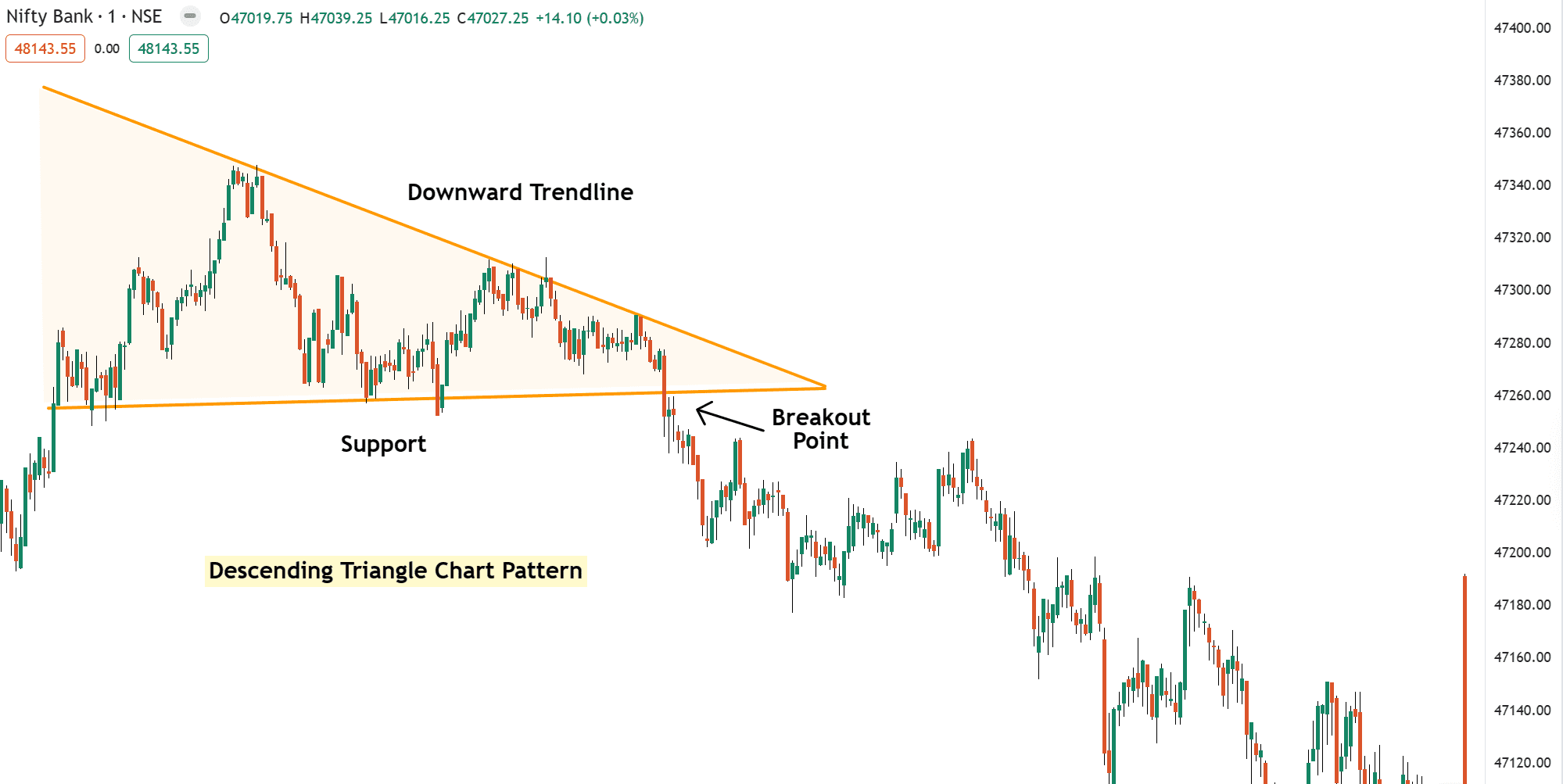
Horizontal Support
Draw a line horizontally across swing lows where price faces repeated support, which indicates a strong buyers presence at that level.
Trendline Resistance
Drawn downward trendline, connecting a series of lower highs. Indicates that sellers are stepping in at increasingly lower levels, showing that selling pressure is increasing and prices are moving in a narrowing range.
Breakout
The breakout mostly happens in the same direction the price was already moving, usually going down. This pattern is the perfect example of price action: lower highs show the market going down step by step, and buyers are trying multiple times now that they are weak and the market is ready for a bearish rally.

How to Trade the Descending Triangle Pattern
There are some rules when trading with the Descending Triangle Pattern.
Once you’ve spotted this masterpiece, prepare for the perfect trading entry!
Entery Point
Enter the trade when the price breaks below horizontal support and wait for a candle to close below the support to get confirmation.
Or you can wait for a Retest/Pullback to protect from falls breakdown
Stop Loss
Place the stop loss above the high of the recent lower high or swing high.
If the price moves in your direction, trail your stop loss using this technical indicator to protect your gains.
Profit Target
Measure the height of the triangle (from support to the highest point of resistance), then add that same distance below the point where the breakdown happens. This gives you a rough idea of where the price might go next.
Pros & Cons of Descending Triangle Pattern
Pros
- A pattern helps to follow the trend.
- Provides well-defined entry, stop-loss, and target levels.
- Suitable for short-term trading
Cons
- It may take time to fully form.
- False breakouts possible (Candle Wicks)
Common Mistakes to Avoid
When trading with this pattern, avoid some common mistakes like trading inside the range and relying too much on textbook patterns.
- Don’t enter before the breakout confirmation.
- Misdrawing trendlines (forcing pattern)
Most importantly, if the pattern looks confusing, it’s okay to skip the trade to protect your capital is more important.
Have you traded the descending triangle pattern before? What is your favorite chart pattern aside from this one?
Let me know in the comments below!…..